Sticker Charts and Reward Charts: How to Make Them Work
A sticker chart works when it tracks one clear goal, gives quick small rewards and stays positive. Pick one behavior, make it easy to earn a sticker the first few days, and celebrate each win. This guide covers how to set up a sticker chart or reward chart for ages 3 to 12, what to put on it, what rewards to use and the mistakes to avoid.
What a sticker or reward chart does
A chart makes progress visible. Children, especially younger ones, find it hard to see that small steps add up. A row of stickers shows them. The act of adding a sticker is also a small celebration that marks the moment.
Charts are one tool among many. They work best alongside regular routines, clear expectations and plenty of encouragement.
Choose the right goal
The most common reason charts fail is a goal that is too big or too vague. Compare:
| Too vague | Clear and specific |
|---|---|
| "Be good" | "Put shoes on the shelf when you come in" |
| "Do homework" | "Finish 10 minutes of activity pages before dinner" |
| "Be nicer" | "Say please when asking for something" |
| "Behave at the store" | "Hold the cart and stay with me" |
Pick one or two goals at a time. Choose something the child can do most days.
Choose the type of chart
| Type | Best for | Ages |
|---|---|---|
| Daily sticker chart | One habit, simple check-off | 3 to 6 |
| Weekly grid | Several habits across the week | 5 to 9 |
| Practice tracker | Daily activity effort, one mark per session | 5 to 12 |
| Calendar chart | Longer goals such as 30 days | 7 to 12 |
| Certificate | A finished milestone | 4 to 12 |
Choose rewards
Keep them small and quick.
- Experiences over objects: extra story time, a game with a parent, choosing the family movie or a walk to the park.
- Privileges: picking the dinner side dish or choosing the music in the car.
- Recognition: a certificate, a bookmark or a "Focus Time" door hanger.
Avoid making screen time the main reward, because it reinforces the idea that the screen is the real prize. For help with that, see how to reduce screen time without battles.
How to set it up in 5 steps
- Pick one goal and describe it in a sentence your child can repeat.
- Decide how stickers are earned. One per time the goal is met.
- Decide the reward and how many stickers earn it. Start low: 3 stickers for a 4-year-old, 5 for a 7-year-old.
- Make it easy at first. Let your child win the first few days.
- Celebrate together. Add the sticker right away, with a smile.
Over time, lengthen the goal (from one day to a week), then taper off as the habit sticks.
Sample setups
A 5-year-old, practice before dinner
- Goal: do the 10-minute activity block.
- Chart: a daily row of five boxes.
- Reward: five stickers earns choosing the bedtime story.
An 8-year-old, a morning routine
- Goal: dress, brush teeth and pack the bag.
- Chart: a weekly grid with three rows.
- Reward: a full week earns a special activity with a parent.
A 10-year-old, building focus
- Goal: finish two activity pages a day, five days a week.
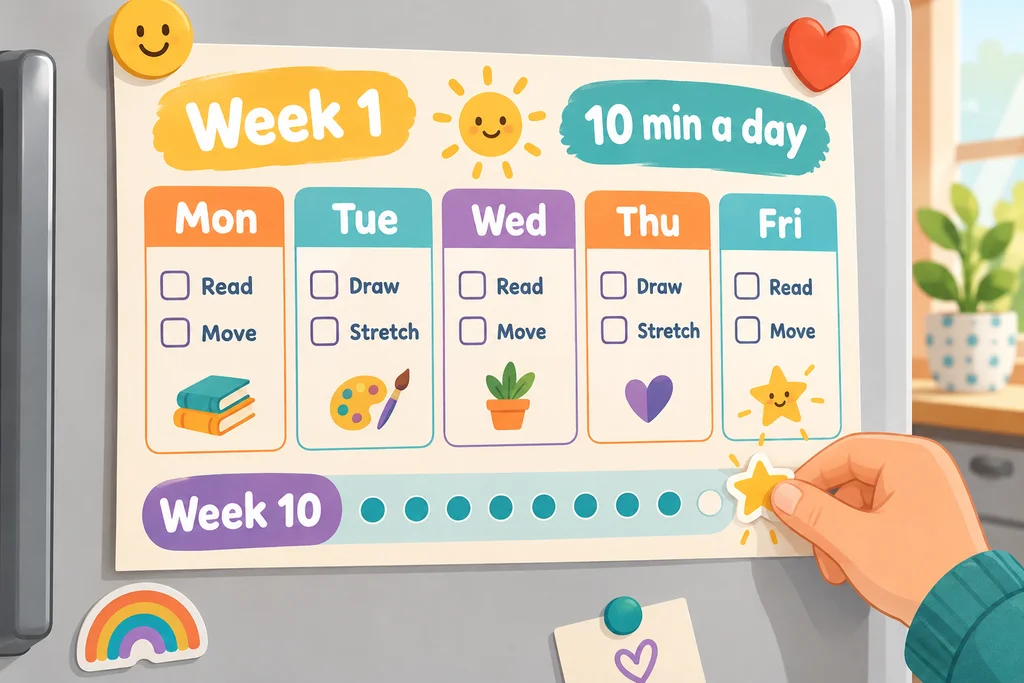
- Chart: a 10-week calendar with a star per day.
- Reward: a certificate at the end of each two-week block.
What Focus Quest includes for celebrating
The Focus Quest Activity System is built around a 10-week routine with two activities a day, five days a week, so it already has a natural chart. These parts support it:
- 10-Week Routine Planner (17 pages) with a printable calendar to check off each day.
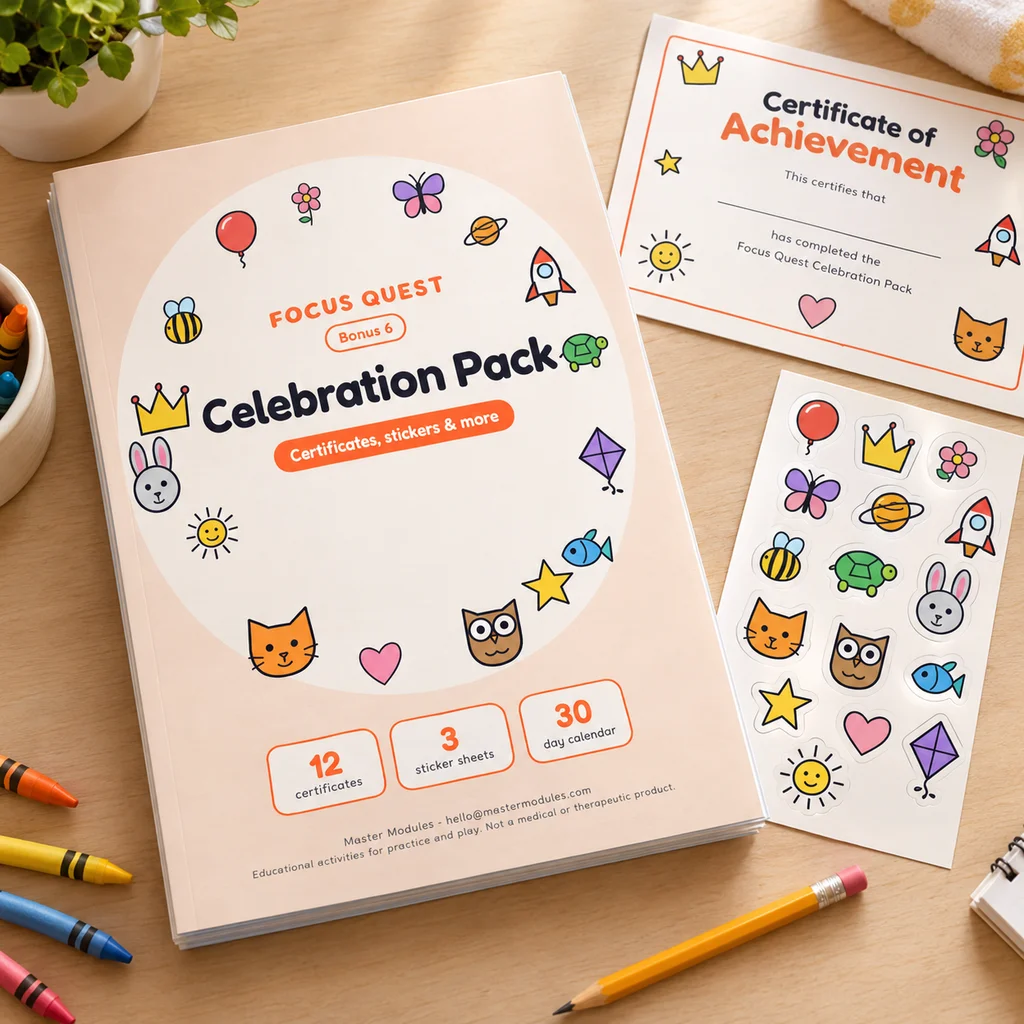
- Celebration Pack (21 pages) with certificates, stickers, bookmarks, a "Focus Time" door hanger and a 30-day calendar.
- Stars & Rewards in the web app, a star tracker for each child.
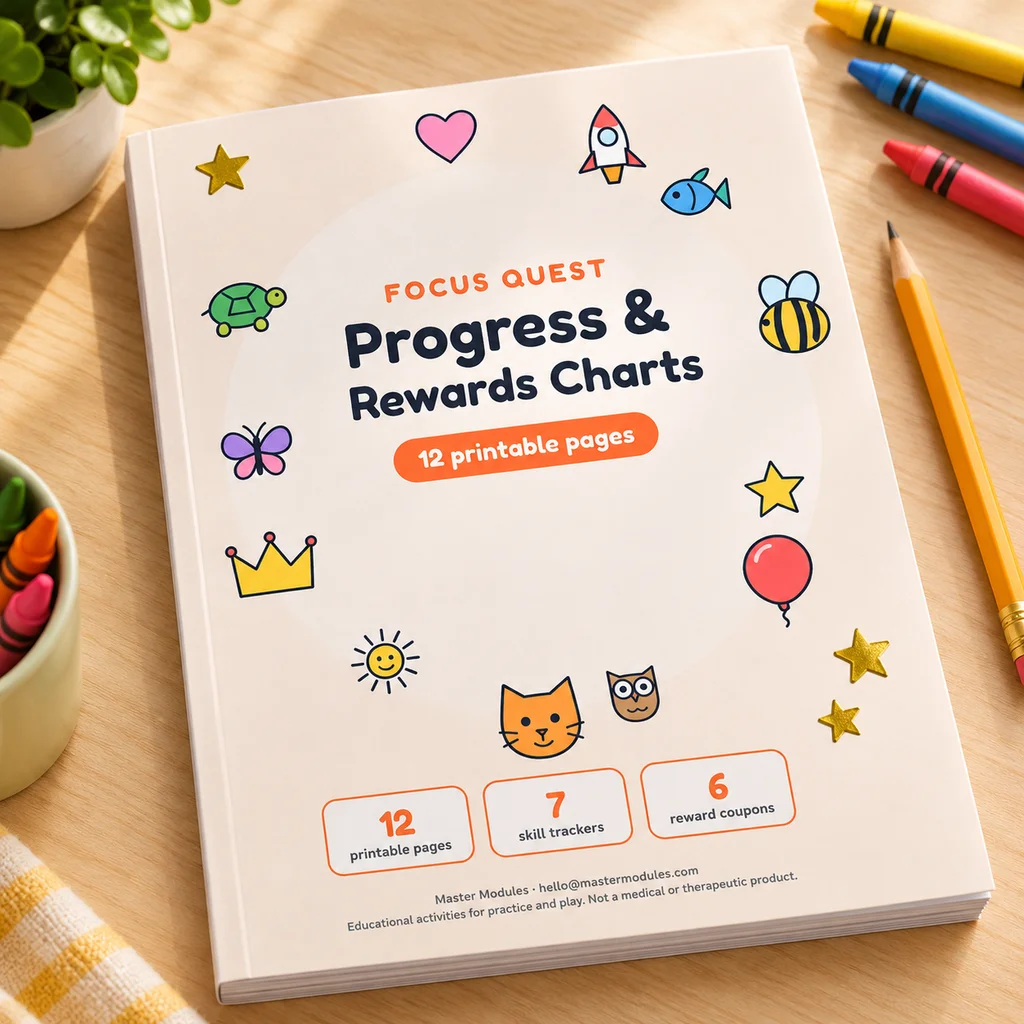
The system does not include dedicated sticker and behavior chart sheets; the Progress & Rewards Charts (12 pages) are a separate add-on that is sold on its own. A simple chart can be hand-drawn on any sheet of paper.
Phasing a chart out
A chart is a bridge to a habit, not a permanent system. Once the goal has been met most days for a few weeks, stretch the goal (from a day to a week), then replace stickers with a simple "great job, you did it all week." Keep one celebration, such as a certificate, for each milestone. If the habit slips, a short return to the chart is fine.
Common mistakes
- Too many goals at once. One or two is plenty.
- Rewards too far away. For young children, a reward should come the same day.
- Taking stickers away. It turns a positive tool into a punishment.
- Comparing siblings. Give each child their own chart and goal.
- Using it forever. Move to praise and routine once the habit sticks.
- Inconsistency. Missing days weakens the effect, so keep it simple enough to maintain.
When it is not working
- Check that the goal is clear and achievable.
- Shorten the time to the reward.
- Ask your child what they would like as a reward.
- Take a break and try again with a new goal.
If you are concerned about your child's behavior, talk to your pediatrician or a qualified professional.
Related guides
Pair a chart with a feelings check-in; see feelings chart for kids. For a calming space, see calm down corner at home. For a schedule to attach it to, see the 10-week focus routine plan.