Calm Down Corner at Home: What It Is and How to Set One Up
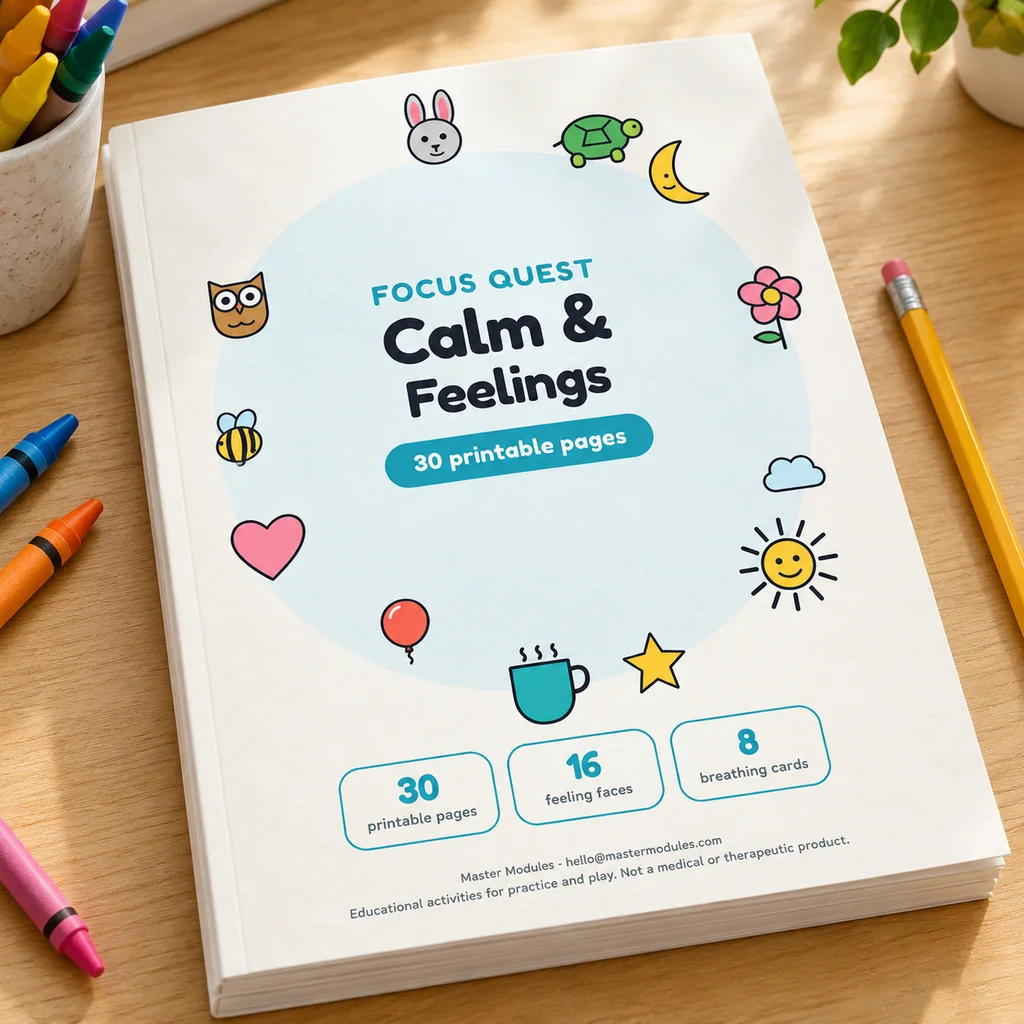
A calm down corner is a small, cozy spot where a child can go to settle a big feeling, with a few simple tools to help. It is not a time-out or a punishment. You can set one up in about 10 minutes with a cushion, a few books, some paper and crayons, and a breathing card or two. This guide explains what to include, how to introduce it and how to use it day to day.
What a calm corner is, and is not
| It is | It is not |
|---|---|
| A place the child can choose | A place the child is sent to |
| Quiet, soft and predictable | A bare, empty spot |
| A tool for noticing and settling feelings | A fix for every behavior |
| Used by the whole family | Only used after a meltdown |
The idea is simple: strong feelings are easier to handle in a calm, familiar space with things that help the body slow down.
Where to put it
- A low-traffic spot in the child's room or a quiet corner of the living area.
- Within sight of you for younger children.
- Away from screens and noisy appliances.
- Near natural light, if possible.
What to put in it
You do not need to buy much. Pick a few items.
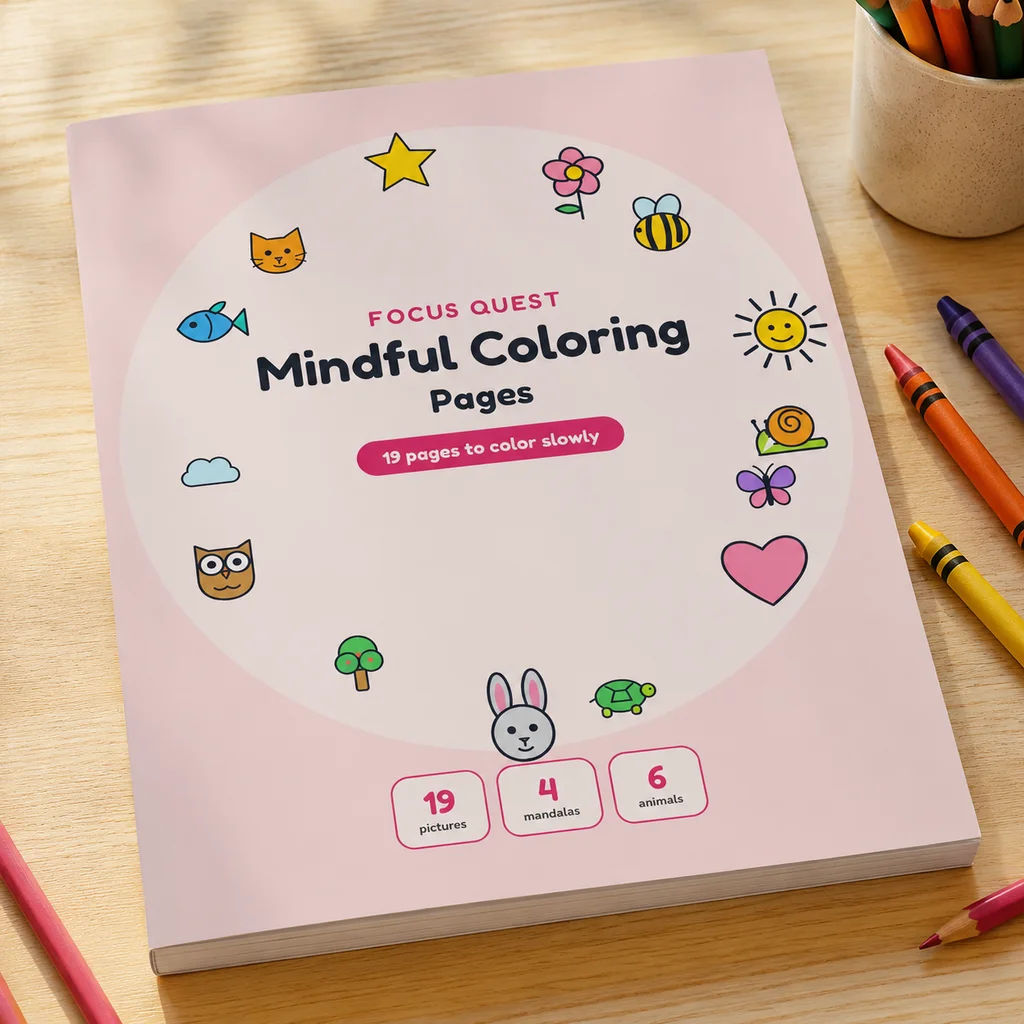
Comfort
- A cushion, beanbag or folded blanket
- A soft toy
Calming activities
- A few picture books
- Paper and crayons
- A coloring page. The Focus Quest Activity System includes 20 Mindful Coloring Pages.
- A sealed jar of water and glitter made by an adult (the Quiet Minute Jar card)
Breathing and body cards
Focus Quest's 50 Screen-Swap Cards include a Breathe group of seven. Some work well in a calm corner:
| Card | What the child does |
|---|---|
| Belly Breathing | Lie down with a soft toy on the belly and breathe so it rises and falls |
| Flower and Candle | Smell the flower (breathe in), blow out the candle (breathe out) |
| Rainbow Breath | Trace a rainbow with a finger, in on the way up, out on the way down |
| Feather Float | Blow gently to keep a feather in the air |
| Five Senses Check-In | Name things you see, touch, hear, smell and taste |
| Quiet Minute Jar | Shake the jar and breathe slowly until the glitter settles |
| Three Good Things | Name three good things from the day |
A feelings chart
A simple chart of faces lets a child point instead of explain. See feelings chart for kids for how to make one.
How to set it up in 10 minutes
- Pick the spot and clear it.
- Add the seat.
- Put 3 to 5 items in a small basket.
- Hang or place the feelings chart nearby.
- Name it together. Let your child choose a name such as "Cozy Spot" or "Quiet Nest."
Involving your child in setting it up makes them more likely to use it.
How to introduce it
Introduce the corner on a calm day, not in the middle of a meltdown.
- Show it. "This is a place you can go when you want to feel calm."
- Try the tools together. Practice a breathing game when everything is fine.
- Explain when to use it. "When you feel mad or sad, you can come here."
- Model it. "I'm feeling stressed. I'm going to take three deep breaths."
- Keep the rules short. One person at a time; stay as long as you need; tidy up when you leave.
How to use it in the moment
When your child is upset:
- Stay calm and speak softly.
- Offer the choice: "Would you like to go to your calm spot?"
- Go with a younger child and sit nearby without talking too much.
- Wait. Do not discuss what happened until the feeling has passed.
- Afterward, talk about it briefly: what happened, what helped, what to try next time.
If your child refuses, do not force it. Try again another day.
A calm corner for older kids
Children aged 9 to 12 may feel a "corner" is too babyish. Rename it ("my space," "the lounge") and let them stock it themselves: headphones, a notebook, a puzzle, a mirror-drawing page, a long maze. The Level 3 pages in Focus Quest include ciphers and mirror drawing, which suit this age. What matters is that the space is theirs, it is quiet, and it is never a punishment.
Using it at school and on the go
A small pouch can travel: one breathing card, a pencil, a folded coloring page. If your child's school has a calm space, ask the teacher which words they use, such as "reset" or "take a break," and use the same ones at home. Consistent language helps a child connect the two places.
Mistakes to avoid
- Using it as punishment. If it feels like a consequence, children will avoid it.
- Overfilling it. Too many toys turn it into a play area.
- Only using it after a meltdown. Visit it on calm days, too.
- Expecting it to work instantly. It takes practice.
Extending the idea
The corner works best as part of a bigger routine: a regular time for quiet activities, a feelings check-in, and small celebrations for effort. The 10-Week Routine Planner that comes with Focus Quest gives you a daily 10-minute plan. For a printable system of rewards, see printable sticker and reward charts. For ideas to fill quiet time, see screen-free activities by age.
Focus Quest does not include a dedicated calm corner pack. A separate add-on, Calm & Feelings (30 pages), is sold on its own and is not part of the main system.
This is general parenting information. If you are concerned about your child's emotions or behavior, talk to your pediatrician or a qualified professional.