Kids Restaurant Placemat Printable: A Layout That Survives the Wait for Food
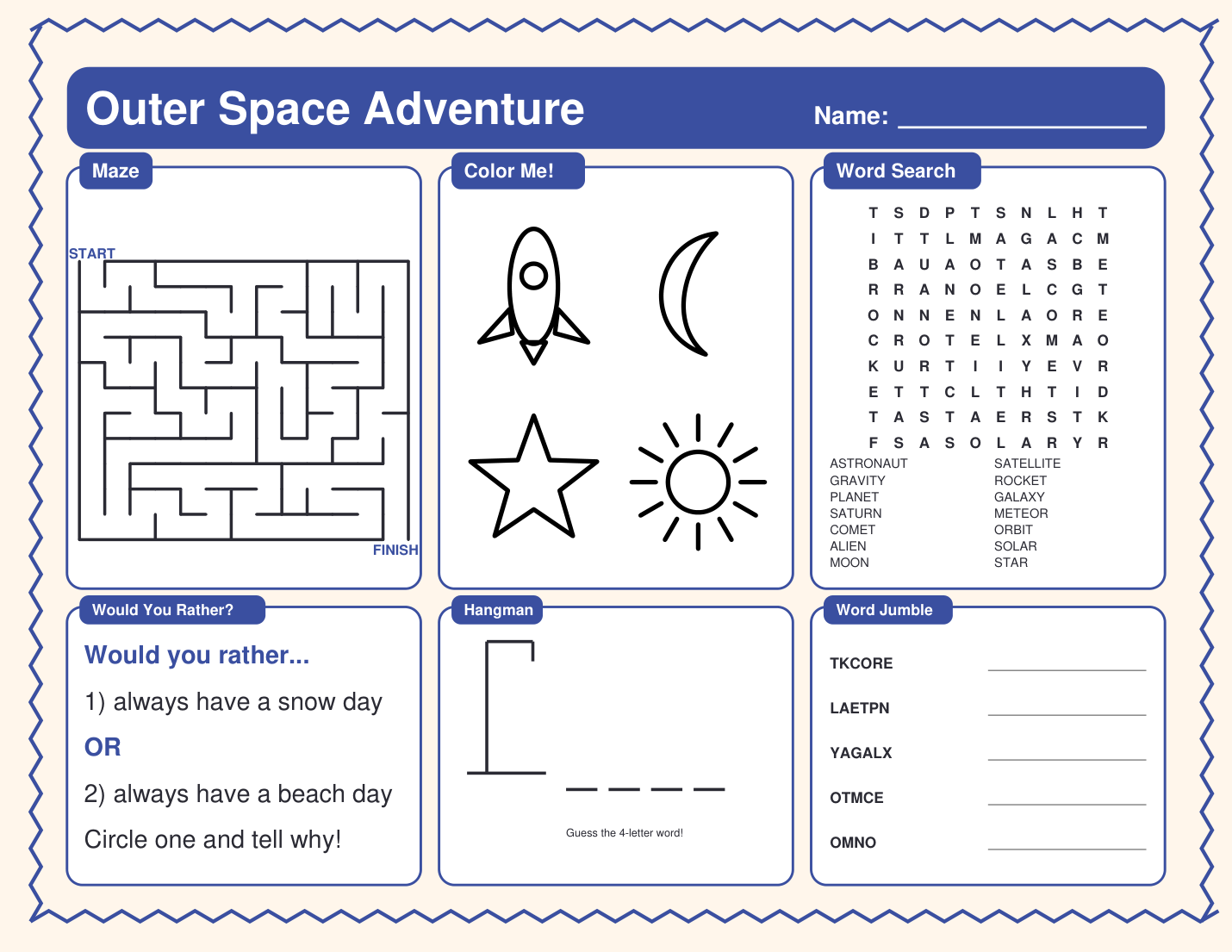
A kids restaurant placemat has one job: occupy a child from the moment they sit down until the food arrives. That is usually ten to twenty minutes, and everything on the mat should be designed for it. The good ones are short, tidy and forgiving: easy to start, impossible to fail, and not so engrossing that the child ignores the burger when it comes. Here is how to design one, whether you run a cafe, host a family brunch or want a tablecloth-style mat for your own kitchen.
What the wait looks like
Picture the scene. A four-year-old, a seven-year-old, and a menu that takes the adults five minutes to read. Children who are bored in a restaurant start throwing spoons. A placemat that gives them something to do reduces that, and it signals to the parents that the place cares.
A good restaurant mat answers three situations:
- The first two minutes. Something to grab at once: a coloring corner and a crayon.
- The middle. A puzzle that takes a few minutes: maze or word search.
- The end. A small thing to take home or finish later: a joke to tell, a game to play on the car ride.
Layout rules
Keep activities away from the edge
Plates and cups cover the edge of the mat. Put the title and the main blocks in the top two-thirds and use the bottom third for low-stakes things like tic-tac-toe or a decorative border.
One block per quarter
A balanced restaurant layout is four blocks around a central title:
| Corner | Block | Notes |
|---|---|---|
| Top left | Coloring element | Young children start here |
| Top right | Maze | Easy for 5-7, harder for 8+ |
| Bottom left | Word search | Eight short words |
| Bottom right | Tic-tac-toe or joke | A two-player moment |
Keep the type big
Menus are read in dim light. Letters in the word search should be large and the word list in plain sans-serif.
Respect the table
Use a frame to mark clear areas. A plate-shaped ring in the center is a nice trick: a circle that says "plate goes here" and keeps the artwork visible around the plate.
Themes that fit a restaurant
- Chef for a day: food words, a pizza-topping maze, a joke about a pickle.
- Around the world: flags, countries, "would you rather eat pasta or tacos".
- Under the sea: for seafood places.
- Farm to table: animals and vegetables.
- Seasonal: pumpkins in autumn, snowflakes in winter.
The kit's seasonal approach lets you swap the frame and the words in minutes. The 112 simple games include tic-tac-toe, dots-and-boxes and hangman boards, and none of them needs more than a pencil.
Print specs for a venue
Check these before you commit to a run of 200:
- Size. 11x17 inches (Tabloid) and A3 are the practical large sizes; Letter landscape and A4 work for smaller tables.
- Bleed and margins. Leave a margin of at least half an inch so nothing is cut off.
- Paper. 80 to 100 gsm paper is fine for single use. For reusable mats, laminate.
- Ink. Black line art plus one accent color keeps cost low.
- Name field. An editable name field is a good touch for a party or a restaurant promotion.
Using the mat as a small marketing piece
A restaurant can add a tiny line at the bottom: the cafe name, a hashtag or the opening hours. That turns the mat into something parents take home. Keep it small: the child is the audience, not the parent.
For home and for parties
You do not need to run a restaurant to use this format. A mat at a home dinner stops arguments about who sits where. At a birthday party, a mat at each place setting gives guests something to do while the cake is being cut. See party kids' table activities for that setup.
A note on the add-on pack
The main Placemat Press · Activity Mat Creator Kit contains the element library, frames, finished mats and listing template. A separate Party and Restaurant Kids' Table Pack exists as an add-on, sold separately, for people who want venue-specific designs. You do not need it to follow this guide; you can make a restaurant mat from the main kit.
Selling restaurant placemats
If you want to sell your designs, you can use the commercial licence that comes with the main kit: you may sell finished placemats you make, but not the kit or its loose elements. Restaurant owners are also buyers: a cafe that wants a seasonal mat for four holidays is a customer who comes back. Offer a pack of four to six themes and a note about size.
Checklist before you print
- Activities in the top two-thirds, plate area clear.
- Four to six blocks, one quiet.
- Type large enough to read in low light.
- 11x17 in or A3 with half-inch margins.
- Test print one and put a plate on it.
- Add a crayon or two when you serve.
For ideas that go beyond a mat, read waiting room and restaurant activities and build the mat itself with the steps in the placemat build guide.
Three ready-to-copy restaurant mats
Pizza Night (ages 4 to 8). Title across the top with a name field. Top left, a coloring slice of pizza. Top right, a maze where a mushroom finds the cheese. Bottom left, a word search with eight toppings (cheese, olive, basil, ham, onion, crust, sauce, oven). Bottom right, a tic-tac-toe grid with a joke underneath: "Why did the tomato blush? It saw the salad dressing."
Pancake Sunday (ages 3 to 6). More coloring and fewer words. A giant coloring stack of pancakes, an easy maze from the plate to the syrup, a "design your own pancake" prompt and a would-you-rather ("Would you rather have pancakes for breakfast or for dinner?"). This one works well because the child can talk to the adults about their answer.
Ocean Catch (ages 6 to 10). A seafood place wants something a little older. Word jumble with sea creature names, a longer maze, a dots-and-boxes grid and a clean joke about a fish. Keep the frame in blue and the line art black.
Each of these takes about fifteen minutes to assemble once the blocks are ready, and you can reuse the layout with new words for the next season. Print three drafts, put a real plate on one, and move any block the plate hides.