The Pros and Cons of Decodable Texts, and When to Stop Using Them
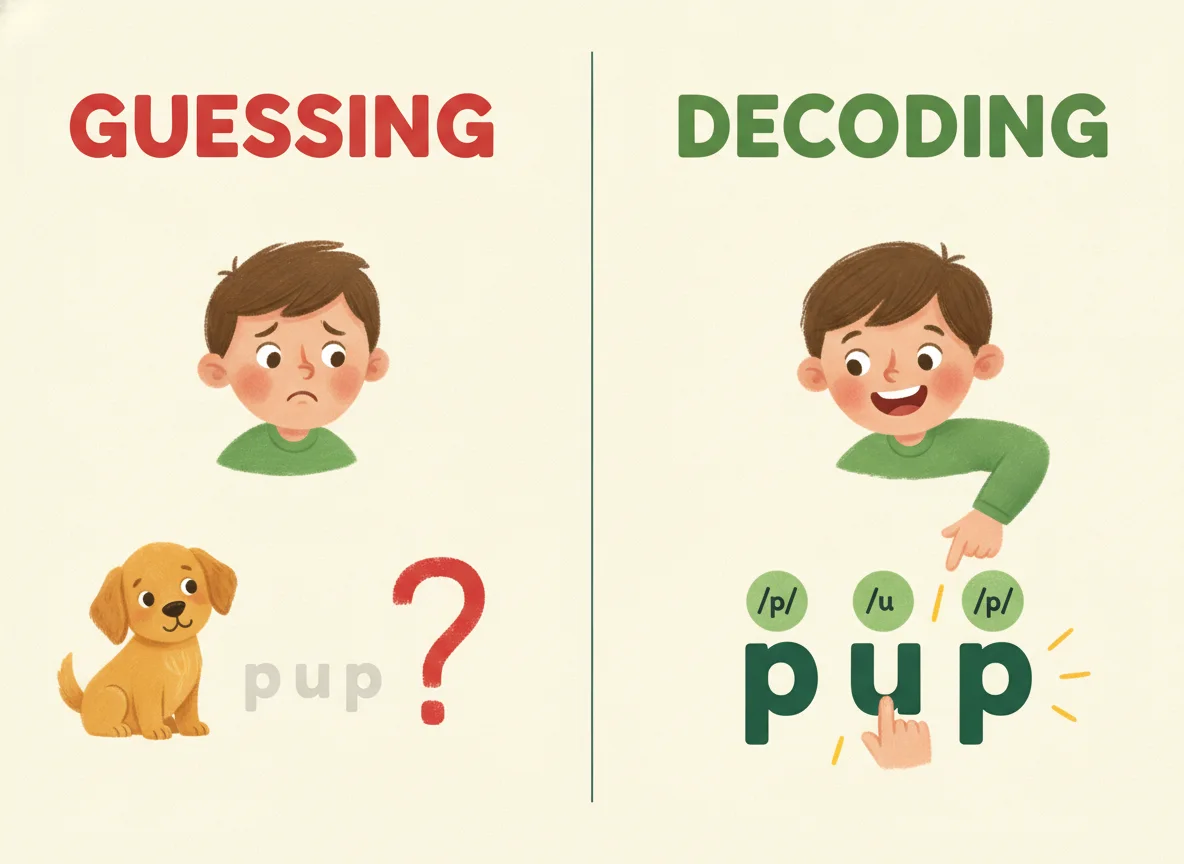
Decodable texts have real strengths and real limits. The honest answer to "are they worth it?" is yes for the job they do, and no if you expect them to do every job. This guide covers the main objections people raise, how to offset each one and how to tell when a child is ready to leave them behind.
What decodable texts do well
Before the disadvantages, a clear view of the benefits.
- Sounding out works every time. Because every word fits taught patterns, a child who looks at the letters is rewarded.
- They remove the need to guess. With no unfamiliar patterns, there is no reason to rely on pictures or context.
- They give targeted practice. A story built around short a repeats short a words in sentences, not just in lists.
- They build confidence. A child who finishes a whole book on their own feels like a reader.
- They are easy to match to teaching. If you taught sh this week, the text uses sh.
The main objections, and what to do about each
1. The sentences can sound odd
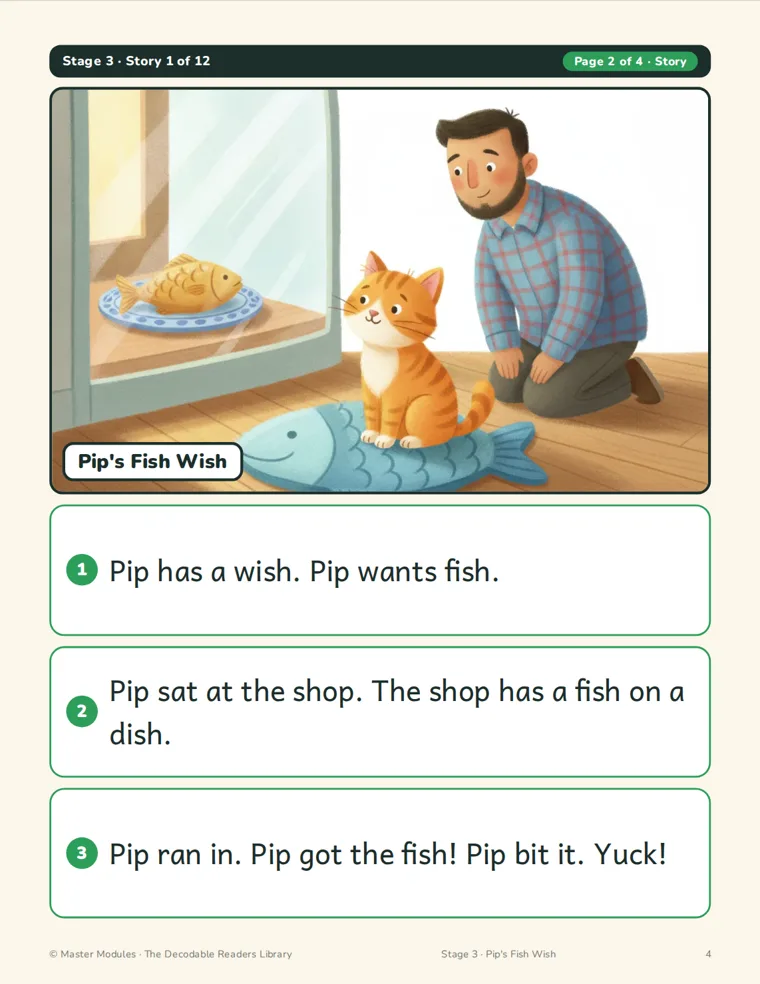
Early decodable text has a very small set of sounds to work with, so sentences can sound stilted ("The fat cat sat on a mat.").
How to offset it: Pick materials with a story arc, not just a string of rhyming words. A small twist or joke makes a short text worth rereading. Read the story with expression yourself so the child hears how it should sound. And remember that the stilted stage is short: as more patterns are taught, the language relaxes.
2. The vocabulary is limited
Decodable text is chosen for its patterns, not for rich vocabulary. A child will not learn many new words from a Stage 1 story.
How to offset it: Build vocabulary through read-alouds. Reading aloud from rich picture books and chapter books is where a child hears words far above what they can read alone. Think of decodable reading as the part of the day for decoding and read-aloud as the part for language.
3. A child may decode without understanding
A child can sound out words correctly and still not take in the meaning.
How to offset it: Ask about the story. Three simple questions after each reading ("Who...?", "Why...?", "What do you think happens next?") turn decoding into reading. In The Decodable Readers Library, every story comes with three comprehension questions, a word hunt and a sentence to complete and write, so the thinking is built in.
4. Children may memorize the story
Short, repeated texts invite memorizing, and a child can recite a page while looking at the picture.
How to offset it: Cover the picture on the first read. Point to each word. Use the word hunt and activity centers, which put the same words in new places so memory of one story is not enough.
5. They can feel like a chore
If every day is a decodable book, some children get tired of them.
How to offset it: Keep sessions short, about ten minutes. Stop while it is still fun. Add a game from an activity center. Switch off with a favorite storybook that you read to them.
6. Not every "decodable" book is truly decodable
Some books use the label loosely, with words outside the taught patterns.
How to offset it: Check a sample. Read a few pages and see if every word fits what your child has been taught. A script-based check, like the one used for this library's stories, is the strongest guard.
A quick pros and cons table
| Pros | Cons | Offset |
|---|---|---|
| Sounding out works on every word | Early text can sound stilted | Choose stories with a plot and a twist |
| No need to guess from pictures | Limited vocabulary | Daily read-alouds from rich books |
| Targeted practice on one pattern | Decoding without understanding | Ask questions after each read |
| Builds confidence quickly | Children may memorize | Cover pictures, point to words, use new-context activities |
| Easy to match to what you taught | Can feel repetitive | Short sessions, games, variety |
When to stop using decodables
The question "when to stop" has no fixed age. It has a clear sign: the child reads unfamiliar, ordinary books accurately by applying phonics, including multisyllable words, with little help.
The move is gradual:
- Mix. Keep decodable stories for practice with new patterns and add ordinary books for reading together.
- Taper. As the patterns are all taught, there is less need for text controlled by them.
- Check. Hand your child a book you have not seen together and listen. If they work out new words using the letters, they have what they need.
Many children are ready to rely mostly on regular books after they have worked through all of the common spelling patterns, including vowel teams, r-controlled vowels and word endings. The Decodable Readers Library covers that range across 9 stages of 12 stories each (108 stories), ending in a stage of big words with endings, compound words and two-syllable words, so the last stage looks much like ordinary reading.
What a well-made decodable program should include
If you are choosing, these are fair questions to ask.
- Is there a stated order of sounds, and does each text follow it?
- Are tricky words taught before they appear?
- Do the stories have characters and a bit of humor?
- Are there comprehension and writing activities, not just reading?
- Is there a way to find the right starting point, so a child is not bored or lost?
The Decodable Readers Library answers these with a 3-Minute Placement Test, a set order across 9 stages, a four-page lesson packet for each story and 8 activity centers for each stage. A Parent Guide covers what to say when a child gets stuck.
Next, read what decodable books are for the basics, decodable vs leveled readers for how they compare to other book types, decodable passages vs. stories for when a passage is a better fit and decodable readers: the 9 stages for a tour of the stages.