Math Puzzles for 3rd, 4th, 5th and 6th Graders
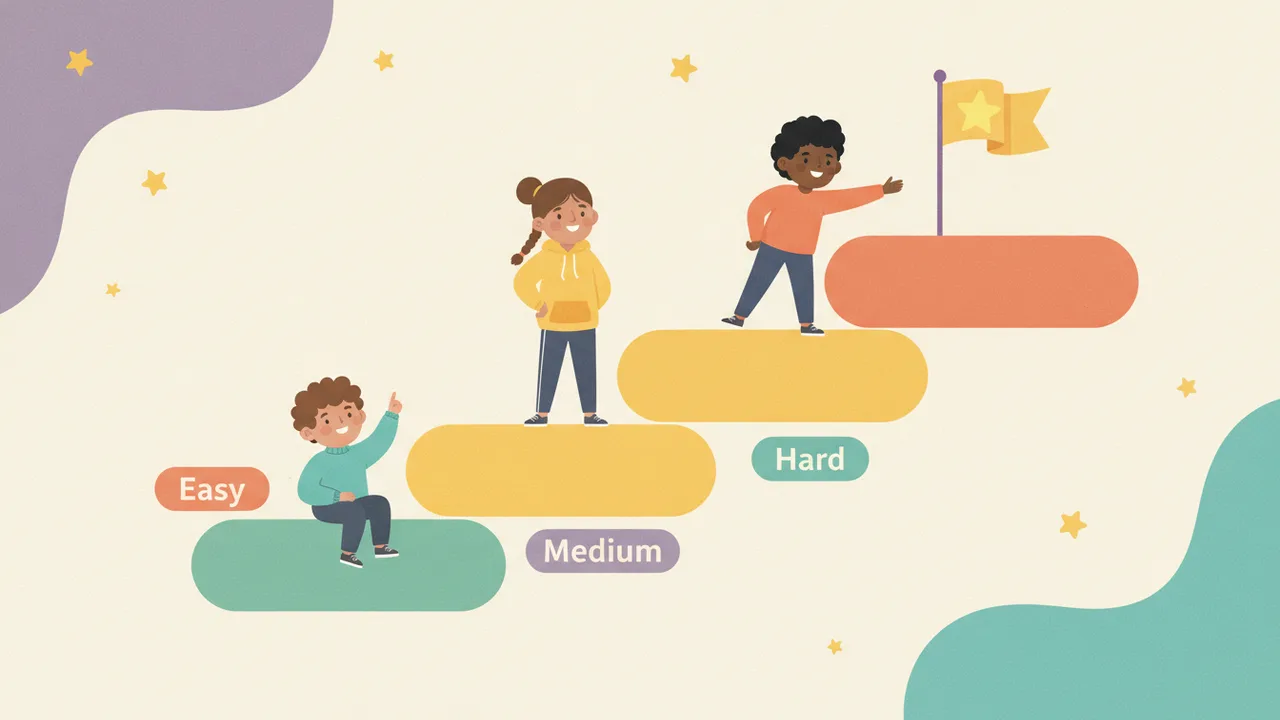
For grades 3 to 6, the best puzzles are the ones a child can start alone, finish with some effort and check afterward. That usually means the Easy level for grades 3–4 and the Medium level for grades 5–6, with the freedom to step across when a child is ahead or needs a reset.
This page shows what each level looks like in seven puzzle types so you can match a puzzle to a child.
Easy: grades 3–4
At this level the aim is to feel capable. Numbers are small, the steps are few and the answer fits together visibly.
| Game | What Easy looks like |
|---|---|
| Snake Math | Only addition and subtraction, totals up to 50, 12–16 steps along the path |
| Cross Math | 2 across and 2 down, only + and −, numbers up to 20, 4–5 empty boxes |
| Honeycomb Math | One flower: a golden centre with 6 cells, plus a few outer sums, several digits already given |
| Math Flow | Addition and subtraction only, numbers up to 50, 4 rows, every box solved by following arrows forward |
| Crack the Code | 3 shapes, addition only, 3 equations |
| Number Pyramid | 4 rows, almost the whole base given, mostly adding up |
| Math Mazes | 6×6 grid where the safe cells are multiples of 5 |
A 3rd grader can usually start with the Snake, Pyramid or Maze Easy puzzles. A 4th grader may be ready to try Cross Math and Crack the Code as well.
Medium: grades 5–6
Medium adds multiplication, bigger numbers and more steps. A child now has to hold more in their head and sometimes work backward.
| Game | What Medium looks like |
|---|---|
| Snake Math | Adds multiplication and exact division, totals up to 150, 18–24 steps |
| Cross Math | 3 across and 3 down, +, − and ×, numbers up to 60, 5–6 empty boxes |
| Honeycomb Math | 2–3 overlapping flowers, 10–16 cells, fewer digits given |
| Math Flow | Adds multiplication, numbers up to 100, 5 rows, a box or two to solve backward |
| Crack the Code | 4 shapes, +, − and ×, 4 equations with a multiplication |
| Number Pyramid | 5 rows, bigger numbers, you begin to subtract your way down |
| Math Mazes | 8×8 grid of calculations where only those equal to 12 are safe |
Which grade first?
| Child | Start with |
|---|---|
| 3rd grader, comfortable with addition and subtraction | Easy |
| 3rd grader who has started multiplication | Easy, then try the first Medium puzzle |
| 4th grader | Easy, moving to Medium as it feels comfortable |
| 5th grader | A single Easy as warm-up, then Medium |
| 6th grader | Medium, with Hard for a challenge |
If a child breezes through Medium, see math puzzles for middle schoolers.
How to use the levels in PuzzlePath Math Puzzle Pack
In every book, puzzles 1–15 are Easy (grades 3–4), 16–35 are Medium (grades 5–6) and 36–50 are Hard (grades 7–8), so a book is a progression you can follow in order. That gives 105 Easy and 140 Medium puzzles across the seven games, 245 in all for grades 3 to 6. Difficulty rises by measurable changes: grid size, operations, number of blanks and steps worked backward. The levels are a guide, not a promise about any particular child.
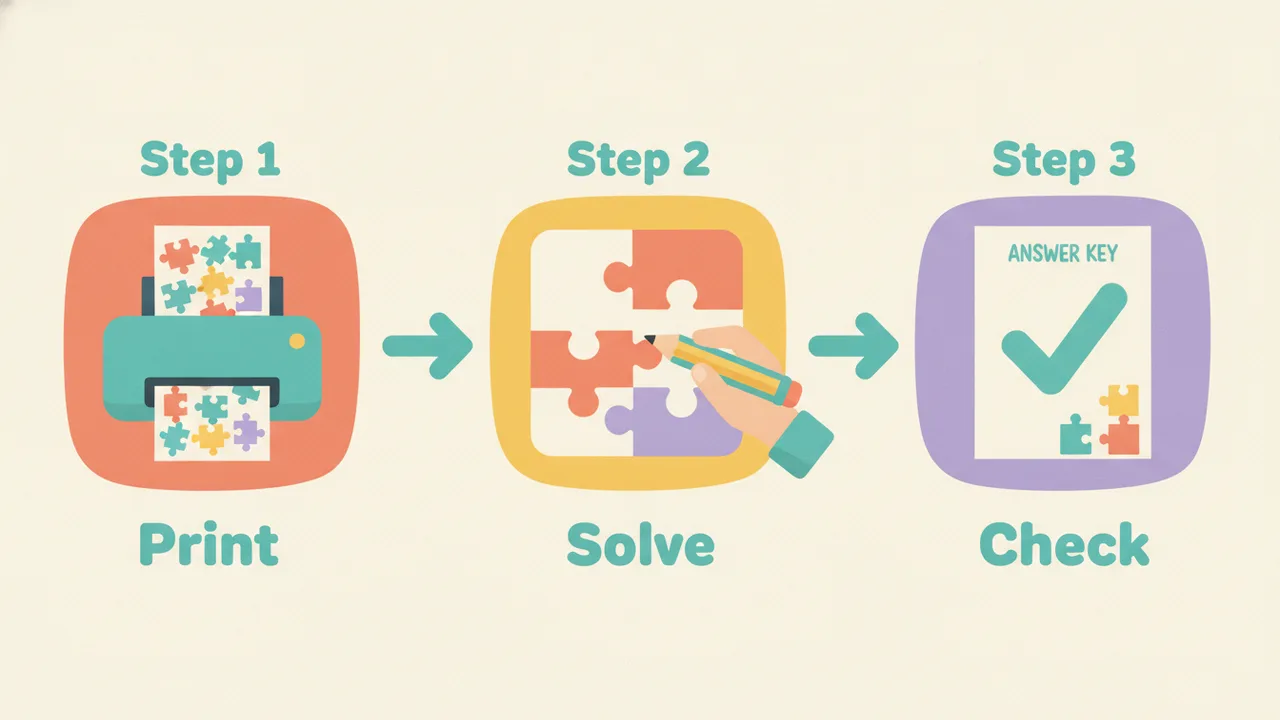
Each book starts with a "How to play" page with a worked example, ends with an answer key, and every puzzle has one answer confirmed by a separate solver. The Parent & Teacher Quick Guide suggests ways to use the levels for a warm-up, a center, early finishers or homework.
A four-week plan for grade 4
| Week | Focus | Sessions |
|---|---|---|
| 1 | Three games at Easy: Snake Math, Number Pyramid, Math Mazes | 3 × 10 min |
| 2 | Add Crack the Code and Cross Math at Easy | 3 × 10 min |
| 3 | Repeat favorites; try the first Medium of two games | 3 × 10 min |
| 4 | Mix: one Easy, one Medium, one child's choice | 3 × 10 min |
For a 6th grader, start the same plan at Medium and add a Hard puzzle in week 4.
Tips for the adult
- Let them read the example. The "How to play" page is written for kids.
- Wait before helping. Two minutes of struggle is useful.
- Ask, don't tell. "Which box has the fewest choices?" beats "Do this one next."
- Celebrate corrections. Fixing a mistake with the key is progress.
- Move levels freely. There is no shame in stepping down for a day.
Keep going
For fluency practice with a game format, see math fact fluency games. To see all seven types, read printable math puzzles. For a longer plan, see math enrichment at home.